French holidays
France is full of rich history and lively celebrations that offer a unique glimpse into French cultural heritage and its spirit of togetherness.
National Day
National Day, celebrated every year on July 14, commemorates the storming of the Bastille in 1789, a pivotal event that marked the beginning of the French Revolution. This national holiday symbolizes liberty, equality, and fraternity, bringing citizens together in patriotic pride.
Celebrations aren’t limited to Paris. France’s regions add their own unique flair to this important event. In Provence, you can watch a traditional bull run (yes, like in Spain, but very French). Bulls are released into the streets and locals take part in a frantic race. In Corsica, expect fireworks and festivities with a Mediterranean twist. In Brittany, you’ll find parades featuring locals dressed in traditional Breton costumes, all while enjoying hearty portions of crêpes and cider. In the Basque Country, you can watch traditional dances and Basque sports, such as Basque pelota, played in town squares.
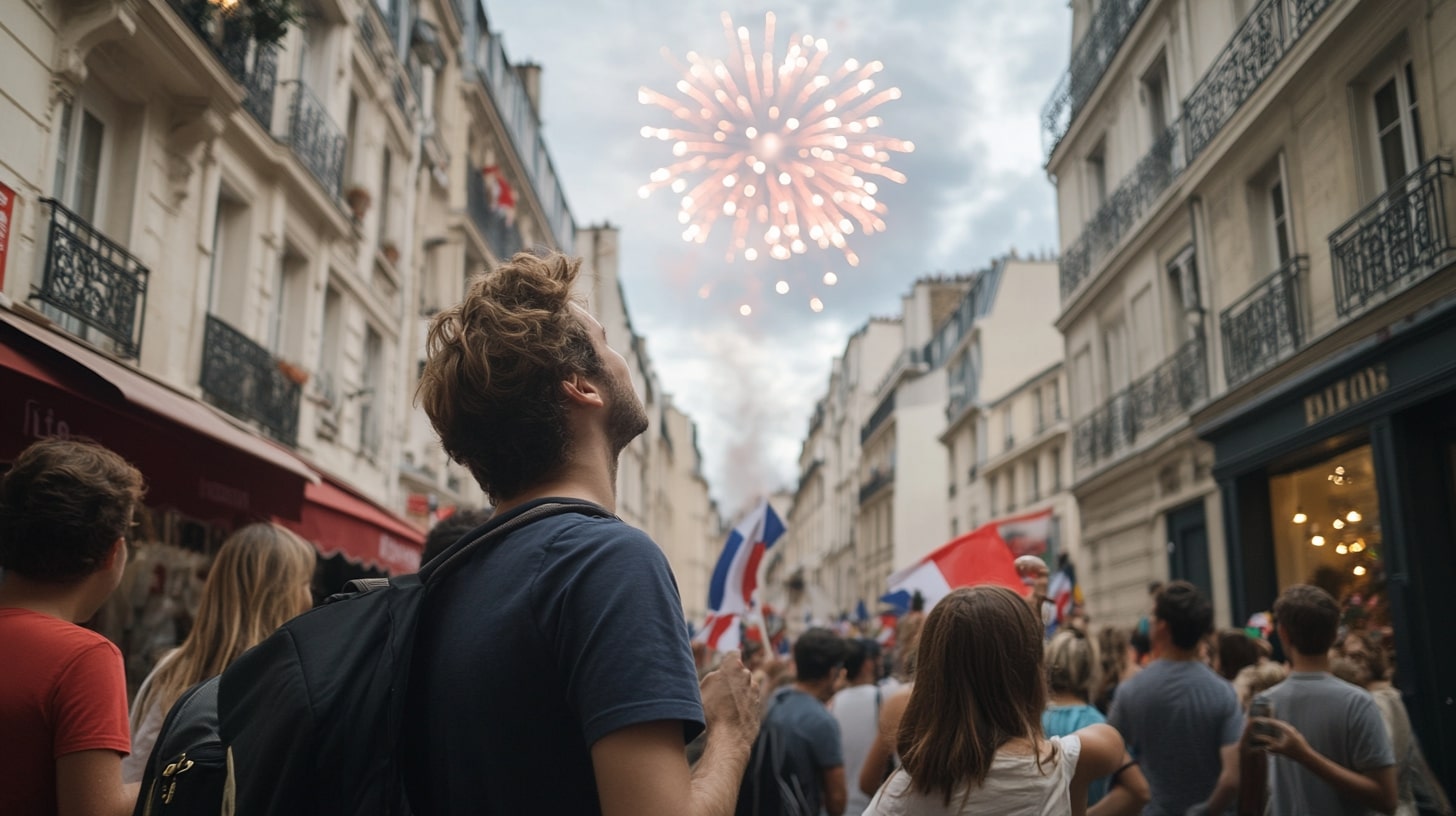
Each region celebrates this holiday with its own customs, turning July 14 into a kaleidoscope of cultural expressions. It’s a day when history meets fun, when freedom tastes like cheese, and when the revolutionary spirit in each of us takes on a French flair. Long live France!
Christmas and Christmas markets
Christmas in France is a warm, festive season, rich in traditions dear to the hearts of the French. At the center of the celebrations is the Réveillon, a sumptuous Christmas Eve dinner featuring exquisite foods such as foie gras, smoked salmon, oysters, and roast capon or turkey, often accompanied by Champagne. Dessert traditionally includes the famous bûche de Noël, a beautifully decorated log-shaped cake. A tradition originating in eastern France, lively Christmas markets have spread across the country, delighting visitors with charming stalls offering crafts, festive decorations, mulled wine, and sweet treats.
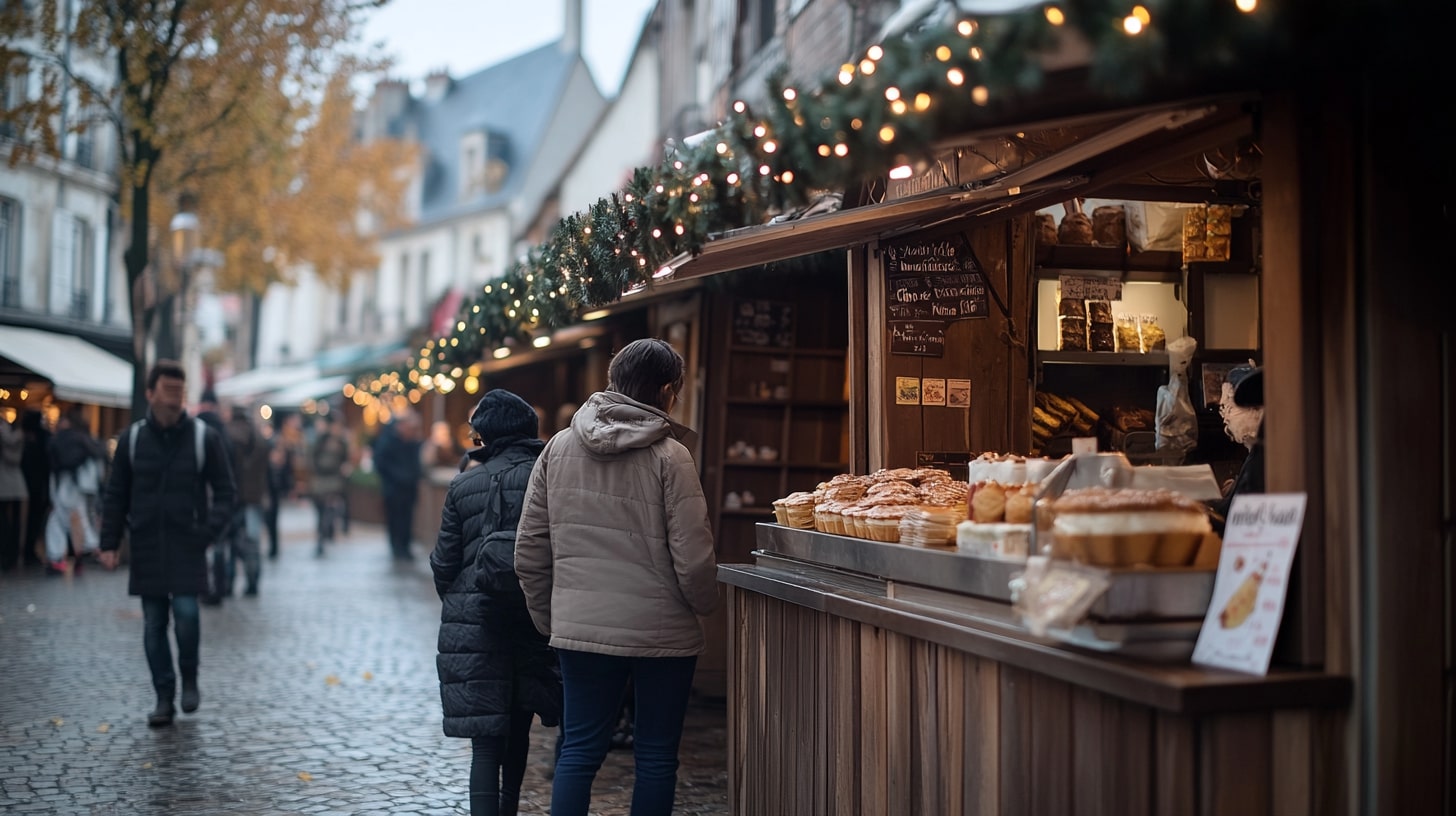
Today, strolling through these sparkling markets is a beloved Christmas ritual in France, capturing the magical spirit of the season. Each region of France has its own variations and special dishes, but the essence of the réveillon lies in indulgence, conviviality, and celebrating the joy of the holidays.
Candlemas
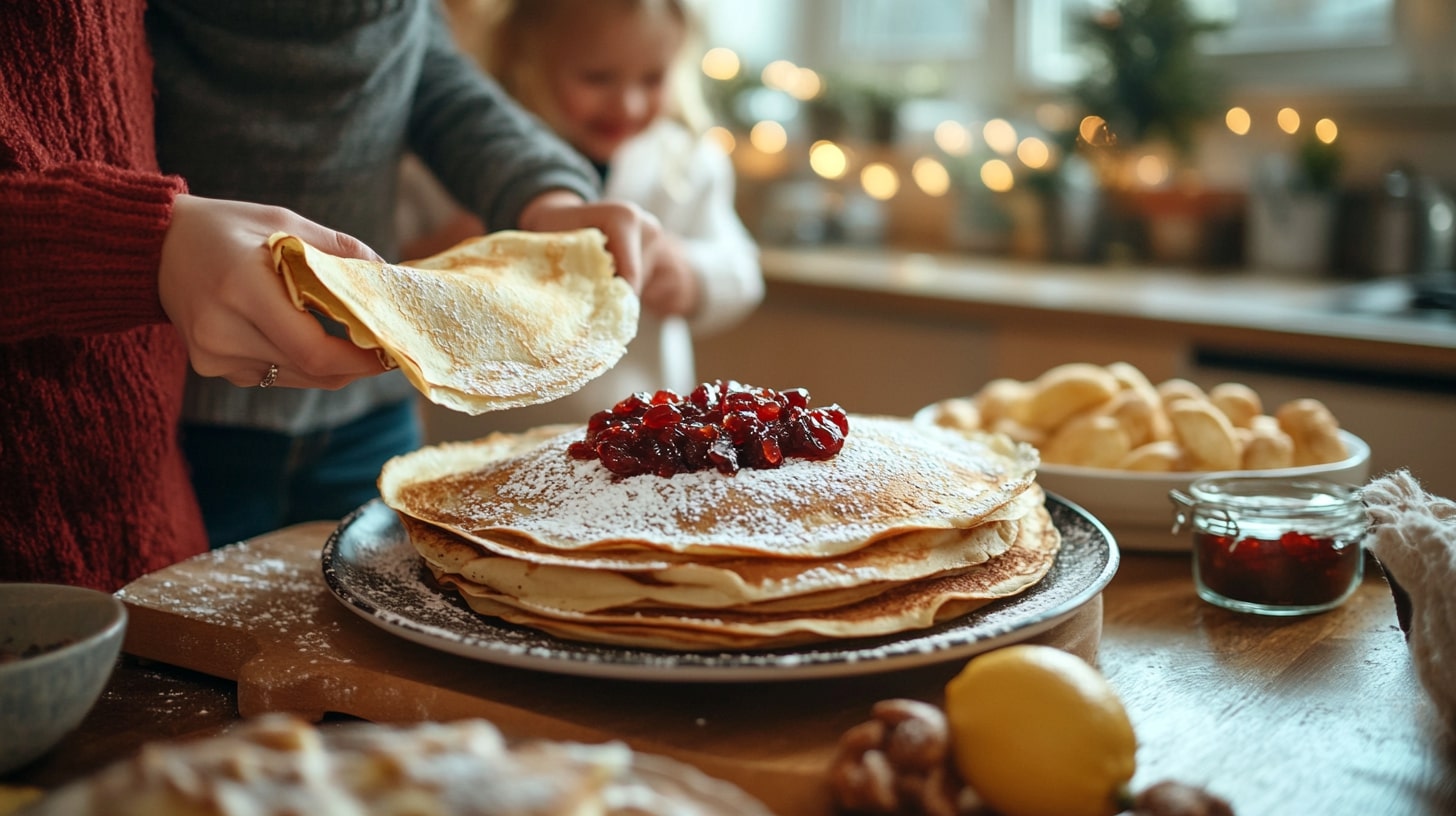
Candlemas, celebrated every year on February 2 in France, blends religious tradition with delicious culinary customs. Historically marking the purification of the Virgin Mary and the presentation of Jesus at the temple, Candlemas has become a joyful family gathering centered on making and enjoying crêpes. Tradition has it that successfully flipping a crêpe while holding a coin ensures prosperity for the year to come.
French families come together to enjoy these delicate crêpes topped with sugar, lemon, chocolate, or jam. Beyond its religious origins, Candlemas remains a cherished French tradition, a symbol of hope, prosperity, and togetherness.
Easter
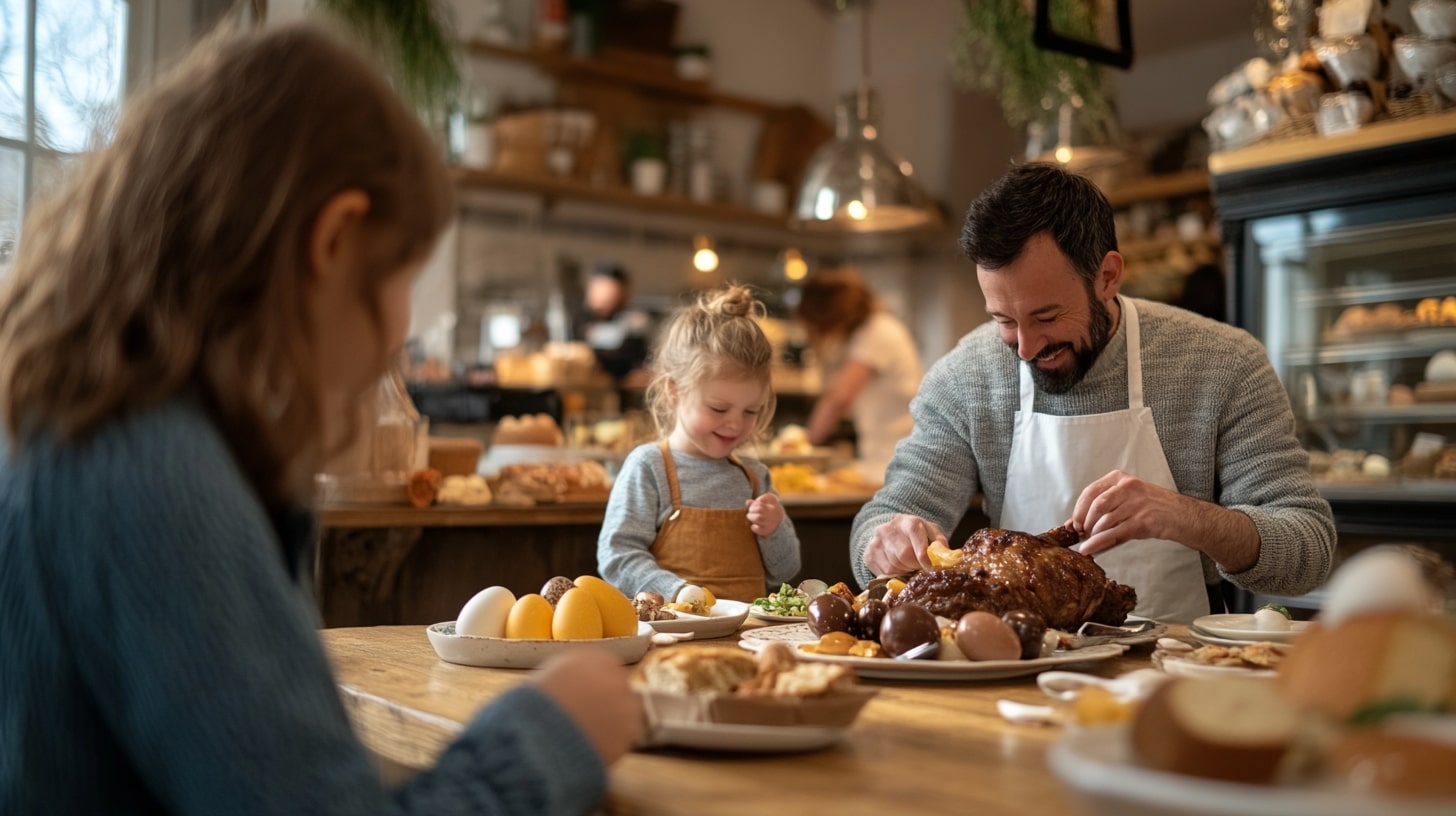
Easter is another cherished French tradition. Families typically gather around elaborate meals, often prepared with roast lamb (“Easter lamb”), fresh spring vegetables, and seasonal treats. Chocolate also plays a leading role, with artisan chocolatiers crafting intricate chocolate eggs, bells, rabbits, and hens, beautifully displayed in pastry shop windows across the country. According to tradition, church bells stop ringing on Good Friday, “fly to Rome,” and return on Easter Sunday, dropping chocolates for children to find.
Children eagerly take part in egg hunts, searching gardens and parks for hidden treats. Easter symbolizes renewal and abundance, making it a treasured time for families throughout France to come together and indulge.
Fête de la Musique
If you’re a fan of live music, you absolutely have to be in France at the end of June! The Fête de la Musique, celebrated every year on June 21, is France’s liveliest national music festival, marking the arrival of the summer solstice. Created in 1982 by the French Ministry of Culture, the festival promotes all musical genres and makes concerts accessible to everyone. Streets, parks, squares, and public spaces across the country transform into stages where amateur and professional musicians perform free concerts. This festive atmosphere encourages audience participation and fosters a sense of community and celebration. From classical ensembles to rock bands and street performers, the festival reflects France’s rich musical diversity.
The Tour de France
The Tour de France, which began in 1903, is France’s iconic cycling race and one of the most prestigious sporting events in the world. Originally created to boost newspaper sales, it has now become a cycling spectacle of endurance, strategy, and sore muscles, held every year in July. Over more than 3,200 kilometers, riders face grueling climbs, dizzying speeds, and sometimes even cows crossing the road—but they also discover France’s magnificent landscapes. Cyclists compete in daily stages, hoping to win the coveted yellow jersey worn by the overall leader. Millions of people line the route to enthusiastically cheer on the riders as they pass.
Culinary traditions
Now let’s tackle a few urban legends about France and the French, and take a look at this country’s most endearing cultural quirks.
The French eat snails and frog legs
Yes, it’s true. But the idea that the French constantly feast on snails and frog legs is a humorous stereotype rooted in culinary curiosity and misunderstandings. Tourists in France often discover these dishes for the first time in restaurants, reinforcing the amusing notion that the French eat them regularly. In reality, many locals save them only for special occasions or gourmet experiences. The average French person is more likely to be seen with a croissant or a baguette.
The French live on wine, baguettes, and cheese
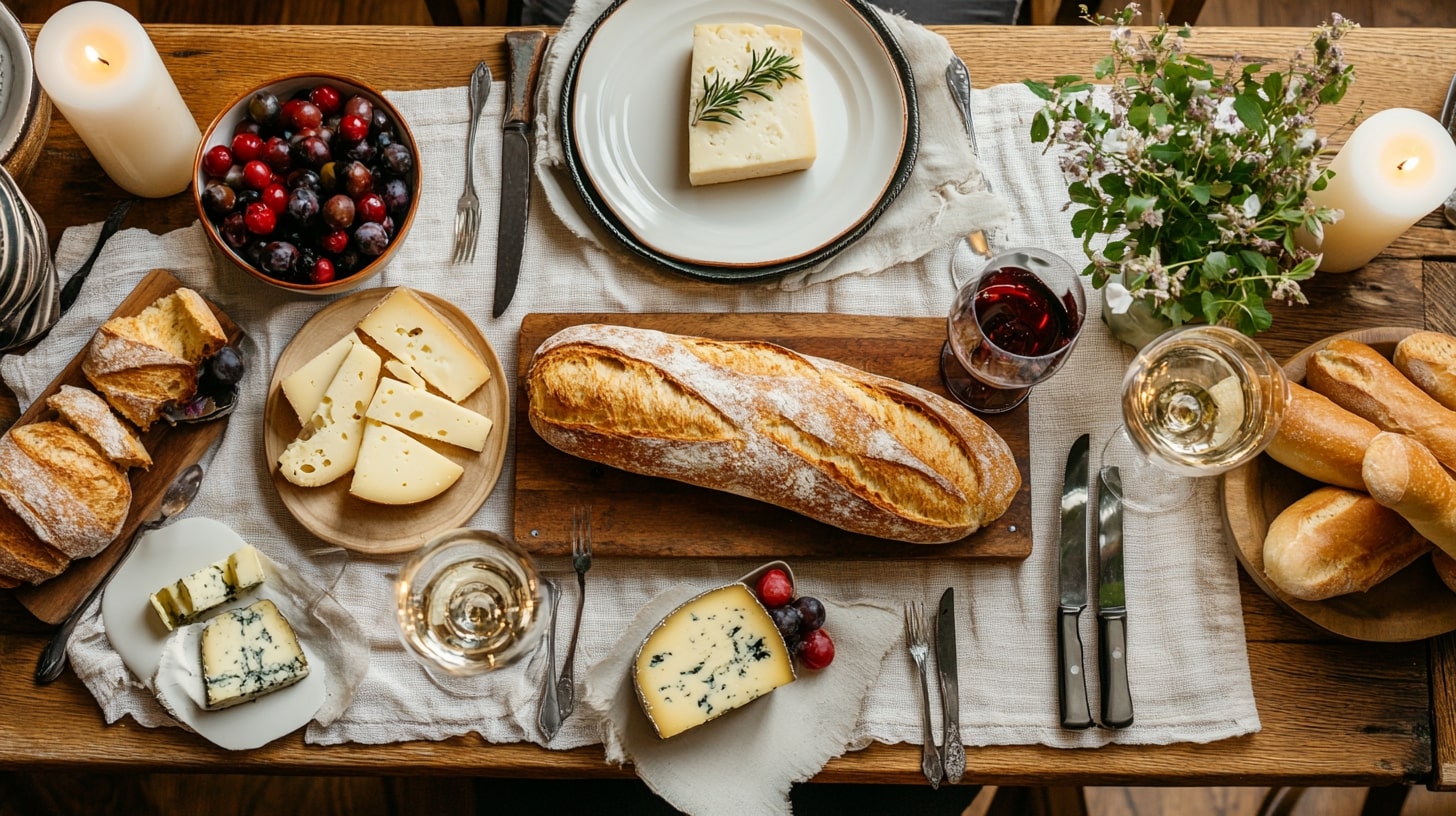
The idea that the French live exclusively on wine, baguettes, and cheese is another amusing stereotype, probably born from France’s iconic culinary image. While these delights are widely loved and of excellent quality, French cuisine is wonderfully varied, with regional specialties like bouillabaisse and cassoulet, to name just a few. But let’s be honest, if you had to survive solely on fresh crusty baguettes, wheels of brie, and bottles of Bordeaux or Chablis, France isn’t exactly the worst place to attempt such a feat!
The French spend hours and hours at the table
The idea that the French spend hours at the table isn’t entirely false. This French tradition dates back to the days of the nobility, when sumptuous feasts made up of many courses were a display of wealth and refinement. The bourgeoisie, eager to follow suit, adopted the custom, turning long meals into social events. Over time, multi-course meals became the norm: starter, main course, cheese, salad, dessert, and of course, great wines at every stage. Even today, meals remain a time to relax, punctuated by lively conversation. The French still believe that good food, good company, and a little extra time are always worth it! After all, why rush to eat when you can debate politics, swap recipes, or passionately discuss the best cheese?
The French art of table setting
Given how much time the French spend at the table, setting a table in France is a true art that reflects elegance, hospitality, and attention to detail. Known as “l’art de la table,” this tradition emphasizes not only functionality but also aesthetic beauty, showcasing carefully arranged plates, polished cutlery, sparkling crystal glasses, and impeccable linens. Each place setting and each glass has its assigned spot, meticulously positioned to reflect the order in which courses will be served. Floral arrangements, candles, and subtle decorations often adorn the table, creating a welcoming atmosphere. Beyond simple decoration, the art of setting the table is a sign of respect for guests and enhances the culinary experience, turning each meal into a sophisticated ritual that embodies French refinement.
The “Café Gourmand”
This is a delicious French tradition that combines the pleasures of coffee with those of miniature desserts, or mignardises. Created in 1985 as a clever way to satisfy a sweet tooth without ordering a full dessert, it generally includes an espresso or coffee served with small portions of classic French pastries, such as mini crème brûlées, macarons, mini chocolate mousses, or fruit tartlets. Very popular in cafés and restaurants throughout France, the Café Gourmand perfectly embodies the French love of variety, elegance, and moderation. It’s the ideal choice for those who think life is too short to choose between coffee and dessert: why not enjoy both?
Shopping at the market
The French have a deeply rooted affection for their open-air markets—true places of tradition, gastronomy, and community life. Imagine a lively scene where locals passionately bargain for the best tomatoes and vendors enthusiastically boast about the superior qualities of their cheese. And let’s not forget the smell of freshly baked baguettes and brioches wafting through the air, melting even the most determined dieters. It’s not just a shopping trip—it’s an experience that awakens all the senses and celebrates life’s simple pleasures.
The afternoon snack, or “four o’clock”
The French 4 p.m. snack is the ultimate childhood ritual—one that adults secretly cherish too. Derived from the French verb “goûter,” meaning “to taste,” this snack is a delightful pause in the day. Picture children running out of school, welcomed by the sweet smell of pains au chocolat fresh from the oven or a simple slice of bread with butter and jam. And let’s be honest—who can resist a buttery madeleine or an éclair with a tea or a hot chocolate? It’s a moment of indulgence and joy that makes the afternoon slump a little more bearable.
The apéritif
The French apéritif, affectionately called “apéro,” is the art of socializing before dinner and whetting the appetite. The term comes from the Latin word “ aperire,” meaning “to open,” because it opens the evening’s festivities. Picture this: friends and family gathering, sipping pastis, kir, or a glass of wine, while nibbling on olives, cheese, charcuterie, and nuts. It’s a relaxed, convivial moment when time seems to slow down and conversations flow as easily as the drinks—a joyful ritual that stretches out meals and makes every social get-together special. The French have perfected the apéro, turning it into a beloved ritual that adds a touch of joie de vivre to the end of the day. Cheers!
Discover our selection of products that are ideal for the apéritif
In summary
French traditions and customs offer a charming blend of history, culture, and culinary delights. From festive celebrations like July 14 and Christmas to everyday rituals like the afternoon snack, embracing French etiquette enriches any stay in France. By understanding these customs, travelers discover a unique and unforgettable experience of French life, along with a wonderful lesson in the French art of living. Live in the moment, make it beautiful, and enjoy every minute.
FAQ
Understanding French social codes means grasping subtle but important customs. It’s advisable to greet people politely, using “bonjour” and “au revoir,” and to use “vous” with strangers or older people. It’s also customary to look others in the eye when making a toast and to greet each person individually when joining a group.
It’s appropriate to be punctual for formal appointments, although a slight delay for a dinner is generally acceptable. It’s best to avoid overly personal topics, such as salary or politics, unless your French hosts bring them up themselves. You should never rush a meal, because in France, eating is a slow and almost sacred moment. It’s also important to respect this very French notion of balance between professional and personal life. Finally, people generally greet each other with a light handshake or a polite cheek kiss, depending on the context. Learning a few words of French will also always make a good impression.
France, and Paris in particular, has long enjoyed a reputation as a global fashion capital. It influences trends internationally and embodies an iconic elegance, notably thanks to haute couture. Yet behind this glamorous image, the French everyday style is often surprisingly casual. The French favor understated, practical elegance, preferring timeless pieces and simple cuts over flashy or extravagant clothing.
Their wardrobe often consists of classic essentials like jeans, well-tailored jackets, and neutral colors—more an effortless chic than a constant pursuit of sophistication. French fashion is built on balance: beautiful pieces and high-end design are appreciated, while comfort and authenticity are maintained in everyday life. It shows that true style doesn’t need to overdo it to be noticed.
